
Worship has always been a natural response when people think about God’s goodness. When believers reflect on His mercy, His power, and His love, praise often rises from the heart without effort. One beautiful way Christians have expressed this praise through the centuries is through the Doxology.
This short hymn of praise may seem simple, but it carries deep meaning. It reminds believers where every blessing comes from and points their hearts back to God.
What the Word Means

The word “doxology” comes from the Greek language. It is made from two words: doxa, which means glory, and logos, which means word. Put together, it means “a word of glory.”
In simple terms, a doxology is a statement or song that gives praise to God. It is a way of saying that God deserves all honor, all glory, and all thanksgiving.
Christians have used these short praises for centuries. They often appear at the end of prayers, sermons, and hymns. Even though the words are short, they carry a powerful message: everything good in life comes from God.
Doxologies in the Bible
Doxologies are special short praises to God that appear throughout the Bible. They often come at the end of prayers or important passages. These words of praise acknowledge God’s greatness and give Him glory.
In the Book of Psalms, doxologies appear as joyful endings to sections of the psalms. They gather together the praises of God’s people and lift them up in worship.
Other parts of Scripture also contain doxologies. When Jesus was born, angels praised God with joyful words. Later, crowds praised God when Jesus entered Jerusalem. The apostle Paul also ended several of his letters with powerful expressions of praise.
These moments show that worship naturally rises when people recognize God’s work in their lives.
Doxologies in Christian Worship
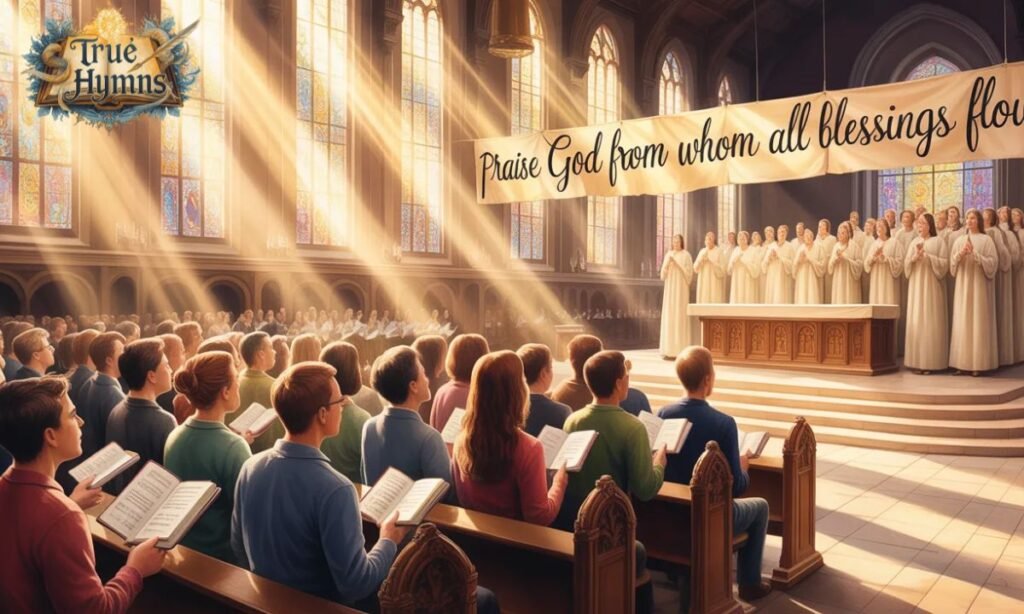
Because the Bible contains many doxologies, the Christian church naturally adopted them in worship. Over time, believers began using short hymns of praise during church gatherings.
These short songs often appear at meaningful moments in a service. Sometimes they follow Scripture readings or offerings. Other times they serve as a joyful conclusion to a time of worship.
Among the many doxologies used in Christian tradition, three have become especially well known.
Gloria Patri
The Gloria Patri, often called the “Lesser Doxology,” is one of the oldest Christian hymns of praise. It has been used in church worship since the fourth century.
This short hymn glorifies the Trinity—Father, Son, and Holy Spirit. It reminds believers that God’s glory has existed from the beginning and will last forever.
Many churches recite or sing this hymn after reading Scripture or praying the Psalms.
Gloria in Excelsis
Another famous hymn of praise is the Gloria in Excelsis, sometimes called the “Greater Doxology.” Its opening line comes from the song of the angels at the birth of Jesus.
This hymn celebrates God’s glory and expresses thanksgiving for His mercy and peace. Over time, it became an important part of Christian liturgy in many churches around the world.
Read More:https://truehymns.com/my-parents/
Even today, this hymn continues to be sung during special worship services.
The Doxology
Among English-speaking churches, one of the most familiar hymns is Doxology. This short hymn of praise has been sung for centuries and remains part of many worship services today.
The hymn is often sung after offerings are given in church. Its simple words remind believers that every blessing in life comes from God.
Because the message is clear and powerful, many people learn the hymn in childhood and continue singing it throughout their lives.
The Rich Meaning of the Doxology
Although it is only a few lines long, the message of the Doxology is deep and meaningful. The words call on all creation to praise God. People on earth and even heavenly beings are invited to join in worship.
The final line praises the Father, the Son, and the Holy Spirit. This simple statement celebrates the heart of Christian faith.
For many believers, singing this hymn feels like a moment of gratitude. It reminds them to pause, look at the blessings around them, and give thanks to God.
Even after hundreds of years, this short hymn continues to unite voices in worship. Its message is timeless: all glory belongs to God, the giver of every good gift.
Frequently Asked Questions
What is the purpose of a doxology in Christian worship?
A doxology is a short praise to God. In many churches, the Doxology reminds believers that every blessing comes from Him.
Where did this famous hymn of praise come from?
It was written in the 1600s by Thomas Ken. Over time, the Doxology became a common hymn in many Christian churches.
Why do churches sing it after offerings?
Churches sing it to thank God for His blessings. The Doxology reminds people that everything they give first comes from God.
Is this hymn mentioned in the Bible?
The exact hymn is not in Scripture. But many Bible verses show praise like the Doxology, giving glory to God.
Why has this hymn lasted for centuries?
Its message is simple and powerful. The Doxology helps believers express gratitude and connect with God through praise.
Conclusion
The Doxology is a small hymn with a powerful message. It reminds believers that every blessing comes from God. For many Christians, Doxology is more than a song. It is a moment of gratitude and worship. When people sing the Doxology, they pause and thank God for His goodness. These simple words have been sung for generations. Yet the meaning of Doxology still touches hearts today.
The history of Doxology shows how faith can live through music. From church services to daily prayers, the Doxology continues to unite believers. Its message is clear and timeless. Praise God for every blessing. Through Doxology, people remember God’s love, grace, and glory. That is why Doxology still inspires worship today.