
The evening sky was quiet over Vermont hills
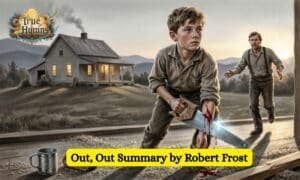
A tired boy worked beside the rattling saw
Dust of fresh wood floated in the fading light
Childhood waited somewhere beyond the yard
But work held his small hands too tightly
The day moved slowly toward supper time
The saw roared suddenly
Steel met a fragile hand
Silence fell on the yard
A frightened laugh escaped him
But fear soon filled his eyes
A child facing a cruel moment
He whispered softly to his sister
Please don’t let them take my hand
Hope trembled in his voice
The doctor came in rushing
Breath slowed beneath the ether
The world waited quietly
Pulse faded like the sunset
He slipped beyond their calling
Life ended too soon
Mountains still stood in silence
The breeze still carried wood scent
But the boy was gone
The world did not stop
People turned back to their work
Evening continued as always
Such is the sorrow of Out Out
A story where childhood meets fate
A moment that breaks the heart
We remember the boy
Lost between work and youth
A fragile life in Out Out
The echo of the saw remains
A reminder of fragile human days
The quiet tragedy of Out Out
Read More: https://truehymns.com/daddy-poem/
“Out, Out” Summary
“Out, Out—” is a tragic poem by Robert Frost about a young boy working with a buzz saw in a yard in Vermont. While cutting wood, the saw suddenly cuts his hand when his sister calls him for supper. The boy becomes frightened and begs them not to let the doctor cut off his hand. The doctor gives him ether to treat him, but the boy slowly dies. In the end, the people around him return to their work, showing how life continues even after a tragic loss.