

In Sympathy by Paul Laurence Dunbar, I hear a cry,
A soft voice rising from a broken sky,
A caged bird trembling behind cold bars,
Dreaming of sunlight and distant stars.
The hills are bright with golden light,
The river flows gentle and clear and white,
The wind moves slow through the open field,
But the captive heart is forced to yield.
He sees the springing grass outside,
He feels the world so wide, so wide,
Yet cruel bars hold his wounded wing,
And silence wraps around everything.
I know why he beats his fragile frame,
Till blood and sorrow become the same,
Old scars burn with a deeper sting,
Still he tries, still he dares to swing.
His bosom sore, his spirit tired,
His only wish is what he desired,
To rest upon a swaying bough,
To taste pure freedom here and now.
But when he sings, do not mistake,
It is not joy his notes awake,
It is a prayer from pain set free,
A cry for hope, a silent plea.
Sympathy speaks of hidden scars,
Of broken dreams and tightened bars,
Of souls that long for open air,
Yet find only struggle and despair.
In Sympathy, we feel his song,
A wounded heart that stays so strong,
Through darkened cage and endless night,
He still believes in morning light.
This is the truth the poem brings,
Why the caged bird sings and sings,
Not out of joy, but faith so deep,
A promise his brave heart will keep.
“Sympathy” Summary
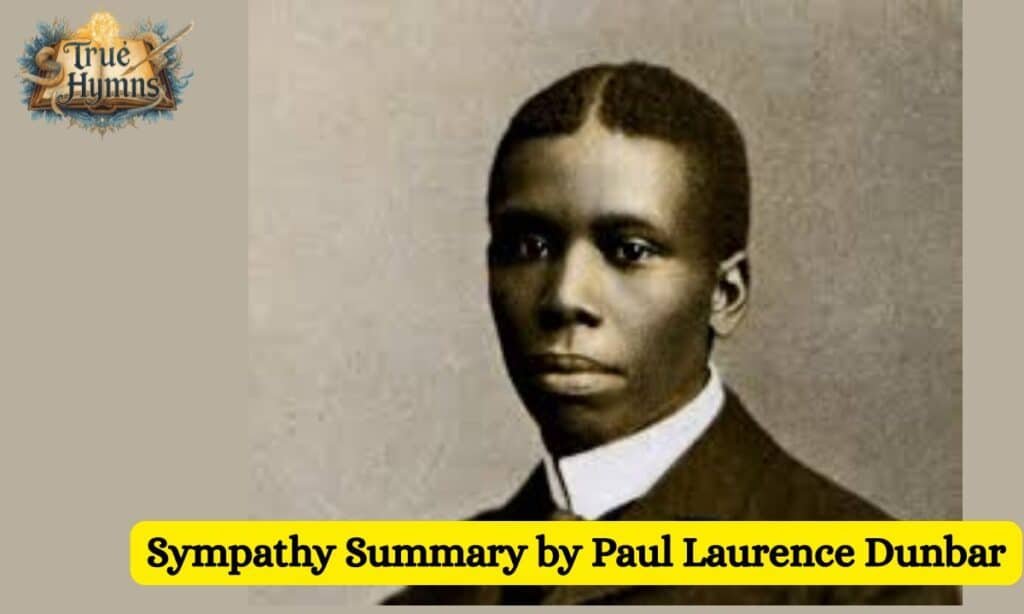
Sympathy is a poem by Paul Laurence Dunbar.
It shows the pain of a caged bird.
The bird sees bright sun, green grass, and a flowing river.
Nature is free and beautiful.
But the bird is trapped behind cruel bars.
He beats his wings until they bleed.
His body is bruised.
Old scars still hurt.
The bird sings.
His song is not joy.
It is a prayer and a plea for freedom.
